


If you have been shopping for a backyard project in Arizona, you have probably run into a wall of jargon. Baja shelf. Sheer descent. Ramada. Pebble finish. Contractors use these words like everyone knows them, and most homeowners nod along and look them up later.
This is that lookup. Every common pool and backyard feature, explained in plain English, with what it actually costs in the Phoenix metro and whether it earns its spot in an Arizona yard. Prices below are typical installed ranges we see locally in 2026. They move with size, access, finish level and how much demo is involved, so treat them as planning numbers, not quotes. If you want a real number for your yard, the Instant Project Estimate gets you close in a few minutes.
Baja Shelf (Tanning Ledge, Sun Shelf, Baja Step)
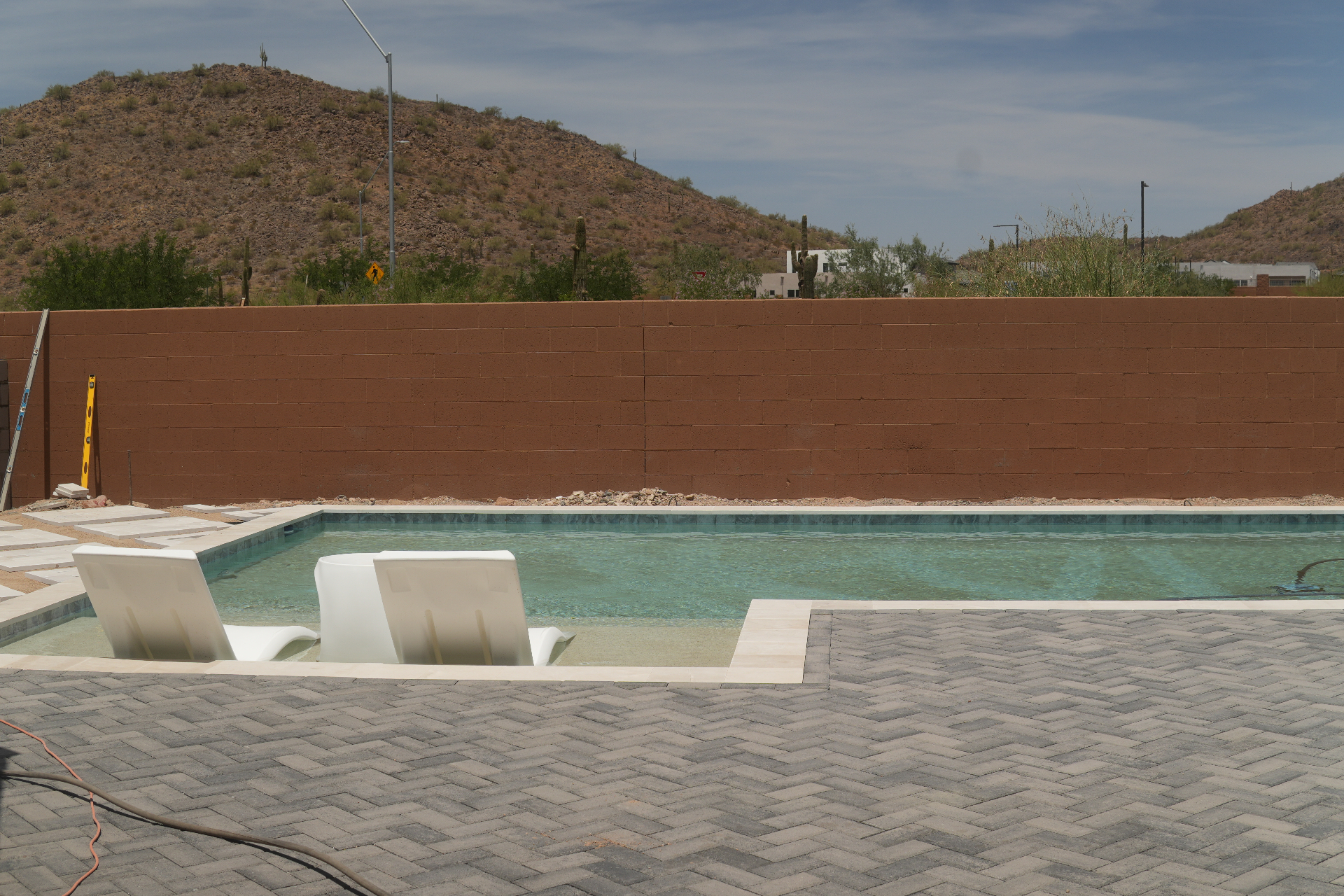
What it is: a shallow shelf built into the pool, usually 6 to 12 inches deep, wide enough to set a lounge chair in the water. Baja shelf, tanning ledge, sun shelf and Baja step all mean the same thing. Some builders reserve "tanning ledge" for a narrow one chair version and "Baja shelf" for anything larger, but there is no official rule.
What it costs: roughly 2,000 to 6,000 dollars as part of a new pool build, driven mostly by square footage and the interior finish that carries across it. An umbrella sleeve cast into the shelf adds around 300 to 800 dollars. Bubblers run about 800 to 1,500 dollars each installed, including the plumbing run.
Does it make sense here: yes, more than almost any other pool feature. In a climate where the water is bath warm by July and the deck is too hot to stand on, a shelf is the only spot that is both wet and loungeable. It is also where parents sit with toddlers and where people who do not really swim end up spending the whole party. Build it bigger than you think you need. The regret we hear is always "we should have made it wider," never the reverse. More on that in our post on why this Baja shelf pool design feels like a resort.
Related service: pool design and construction.
Sun Shelf
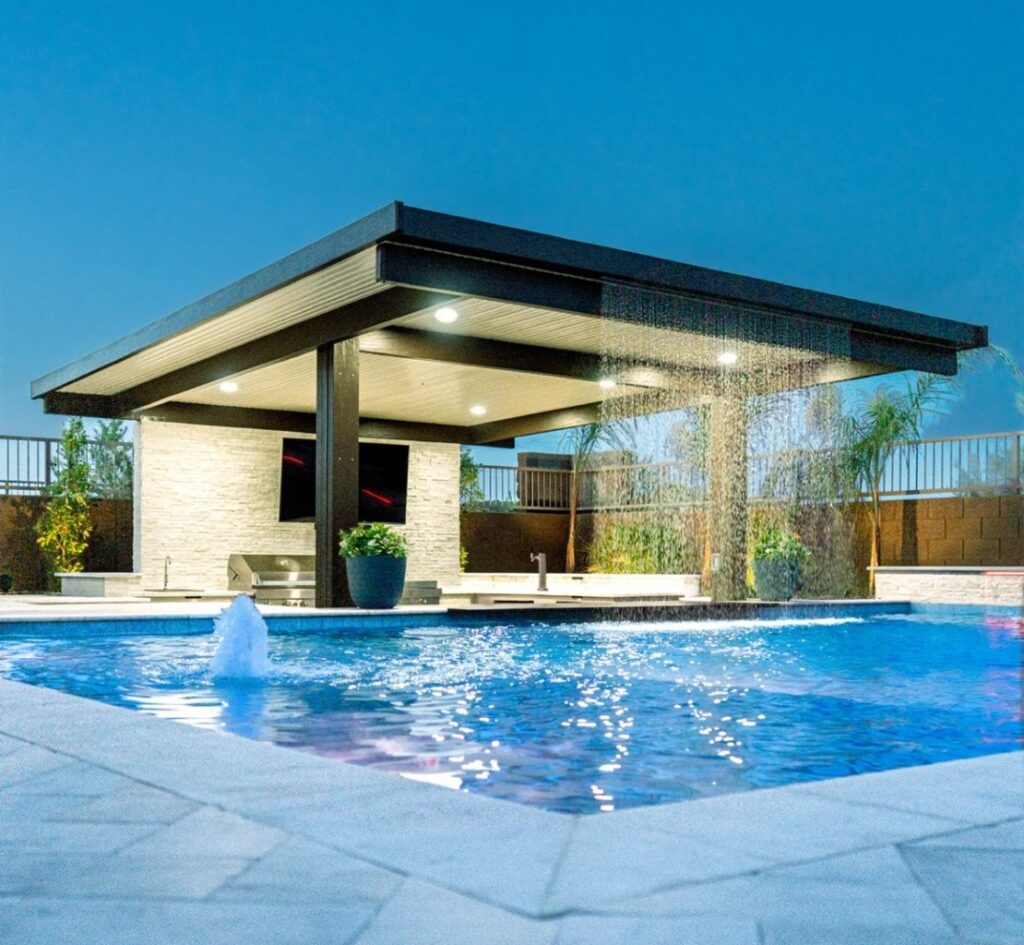
What it is: the same feature as a Baja shelf under a different name. Sun shelf is the term you see most often from national pool manufacturers and in fiberglass pool catalogs, while Baja shelf is what most Arizona builders say out loud. If a plan set says sun shelf and the salesperson says Baja shelf, nobody is describing two different things.
What it costs: identical to the Baja shelf above, 2,000 to 6,000 dollars in new construction. Cutting one into an existing gunite pool is a different animal and typically starts near 8,000 dollars, because it means demo, new steel, new plumbing and refinishing the entire pool interior so the surface matches.
Does it make sense here: yes, and the naming matters when you compare bids. Two proposals can look thousands apart because one includes a shelf and the other calls it an entry step. Read the depth. Anything under about 4 feet wide is an entry, not a lounging shelf.
Related service: pool design and construction.
Swim-Up Bar
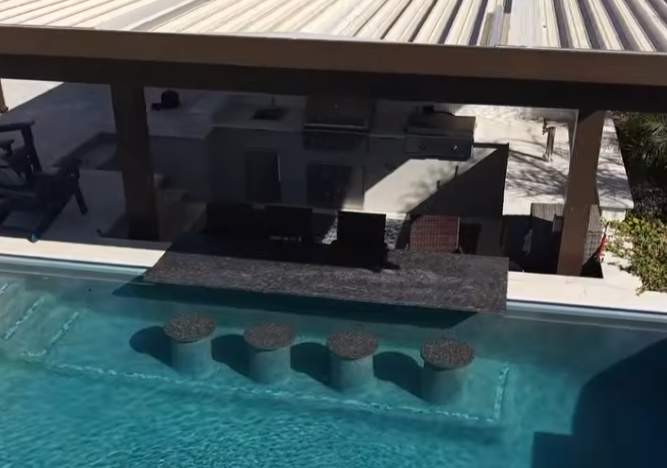
What it is: a counter at the pool edge with stools set on a submerged bench, so swimmers can sit in the water at bar height. Most are built as an extension of an outdoor kitchen or as a standalone masonry counter with a stone or granite top and an overhang on the water side.
What it costs: about 6,000 to 18,000 dollars depending on length, counter material and whether you add a sink, refrigeration or a TV wall behind it. Adding a shade structure over the dry side pushes the total higher.
Does it make sense here: it does if you host. The reason it works in Arizona specifically is that it solves the summer problem of splitting a party between people in the water and people on the deck. It stops being worth it if the bar faces west with no shade, because nobody sits at a 110 degree granite counter in August. Orient it so the seated side looks away from afternoon sun, or put a structure over it. We covered the details in why outdoor bars are changing pool design in Arizona.
Related service: outdoor kitchens and bars.
Spillover Spa
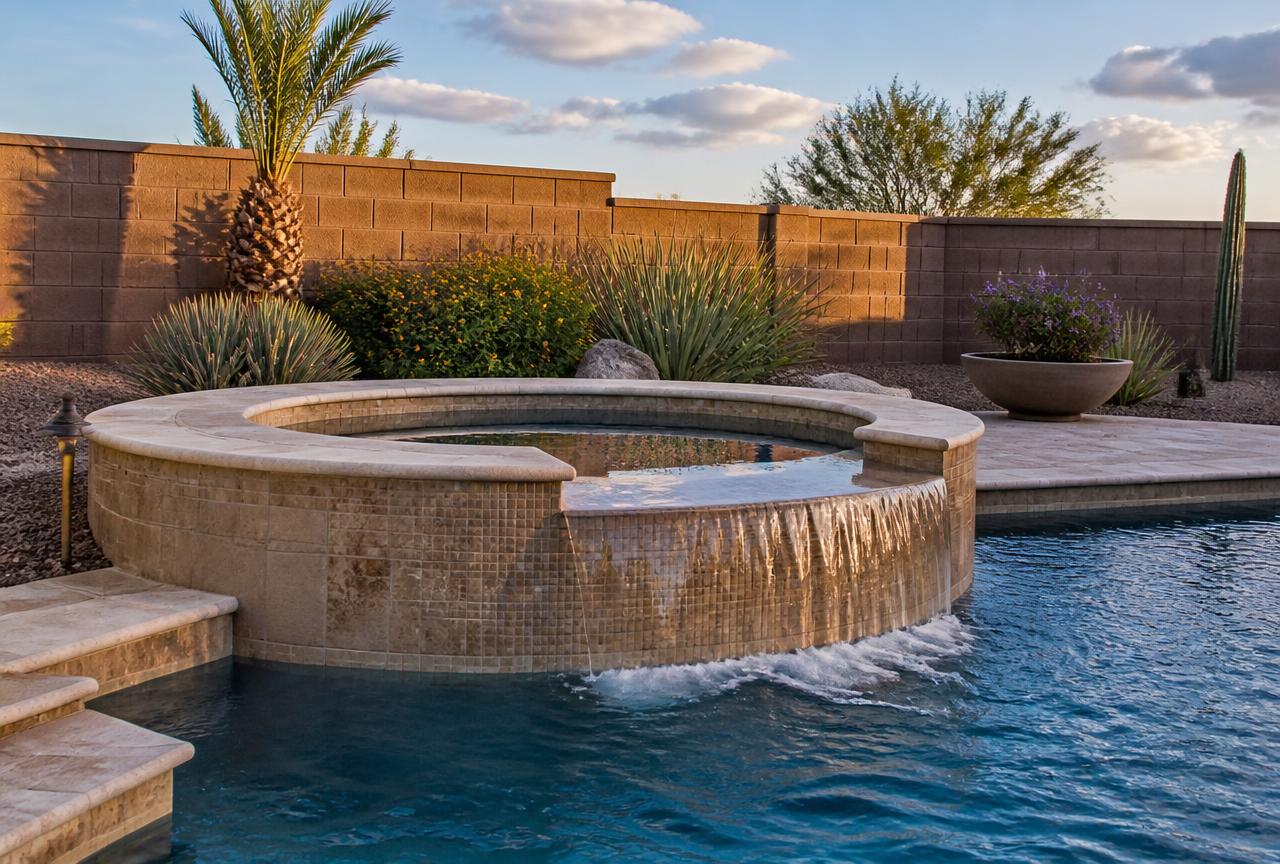
What it is: a spa built against the pool, usually raised 12 to 18 inches, that overflows back into the pool over a tiled or stone faced wall. It shares the pool's equipment and water, which is what separates it from a standalone hot tub sitting on a pad.
What it costs: roughly 12,000 to 25,000 dollars built with the pool. A raised wall with premium tile, a wider spillway or extra jets moves it toward the top of that range. Building one into an existing pool later costs meaningfully more because of the plumbing, heater sizing and deck demo.
Does it make sense here: yes, and it gets used more than people expect. Arizona winters are the season a spa earns its keep, and November through March is genuinely comfortable hot tub weather. Two practical notes. Budget for the gas heater and the gas line, which some bids leave as an allowance. And expect the spillover to be the sound of the yard, since it runs whenever you want white noise, not just when you are soaking.
Related service: pool design and construction.
Pebble Versus Plaster Finish
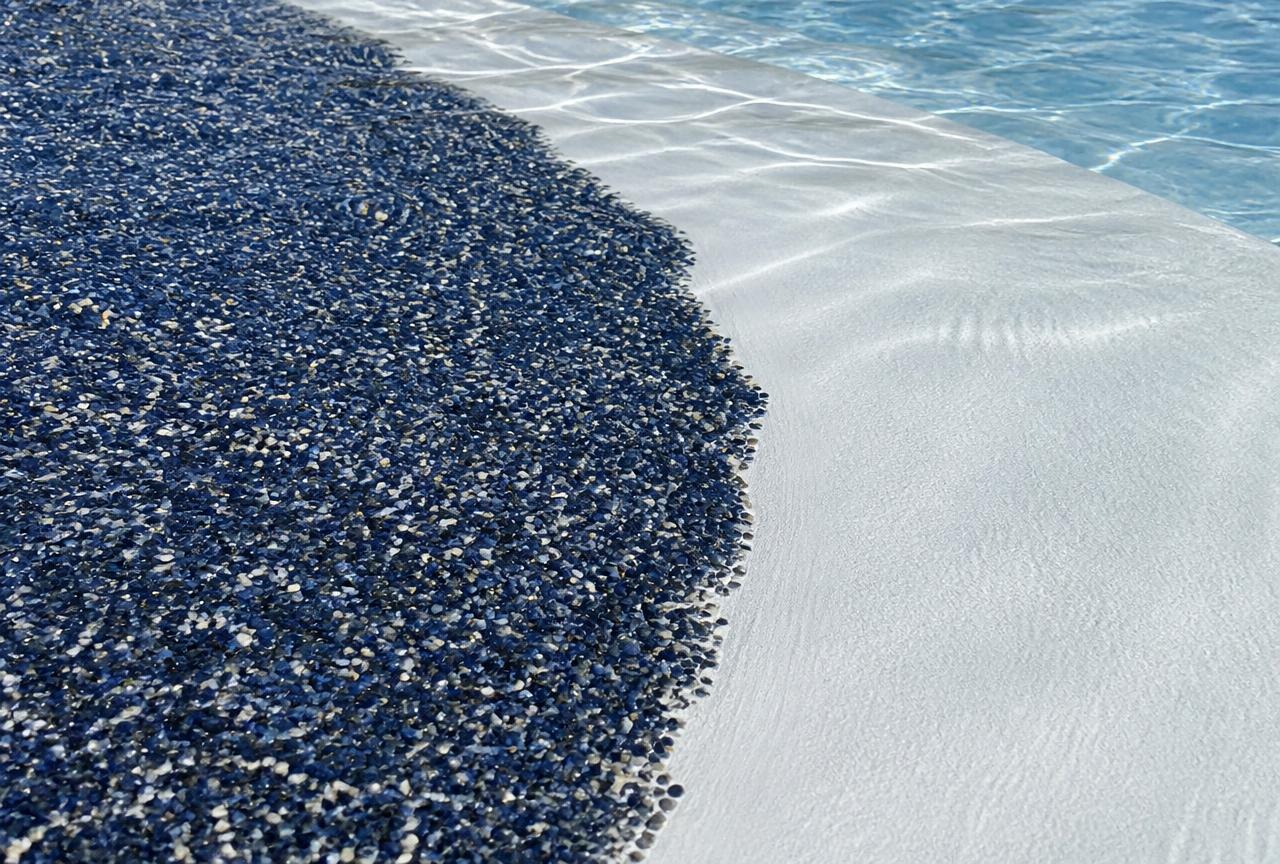
What it is: the interior surface of the pool. Plaster is a smooth cement based coating, the traditional white pool bottom. Pebble is small stones suspended in cement, then exposed, giving a textured surface and deeper water color. Polished pebble products sit between the two, with the durability of pebble and a smoother feel.
What it costs: on a typical 450 square foot pool, plaster runs about 5,000 to 8,000 dollars, standard pebble about 9,000 to 14,000 dollars, and polished or premium pebble blends 14,000 to 20,000 dollars.
Does it make sense here: pebble is the better buy in Arizona in almost every case. Our water is hard, our sun exposure is relentless, and plaster shows etching, staining and mottling faster here than in milder climates. Plaster commonly needs replacing at 7 to 12 years, pebble at 15 to 20. Spread over the life of the surface, the more expensive finish is usually the cheaper one. The one honest argument for plaster is a short hold on the house, or a preference for a smooth bottom for bare feet, in which case look at polished pebble first.
Related service: pool design and construction.
Water Feature Versus Sheer Descent
What it is: "water feature" is the umbrella term for anything that moves water, including bubblers, deck jets, scuppers, rain walls and grotto style rock falls. A sheer descent is one specific type, a fixture that pushes a flat clear sheet of water off a wall or ledge into the pool. Wide sheer descents are often marketed as rain walls or water walls.
What it costs: bubblers 800 to 1,500 dollars each. Deck jets around 600 to 1,200 dollars each. A sheer descent typically 2,500 to 6,000 dollars installed, since it needs a dedicated pump line and a wall to mount to. A full rain wall built into a structure runs 6,000 to 15,000 dollars because you are paying for the structure as much as the fixture.
Does it make sense here: the sound is the point, and in a valley of block walls and close neighbors, moving water masks road noise well. Two Arizona specifics. Hard water leaves scale on the lip of a sheer descent, so plan on wiping it down. And every feature adds evaporation, which in July means noticeably more autofill. We walked through the trade-offs in is a rain wall worth it in your backyard.
Related service: masonry and hardscape.
Ramada
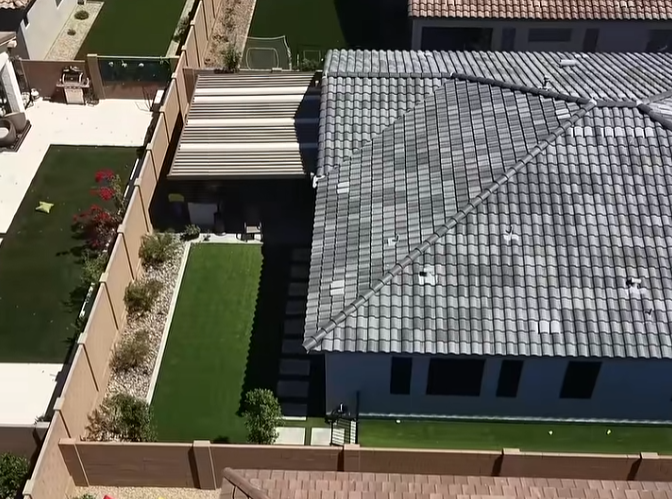
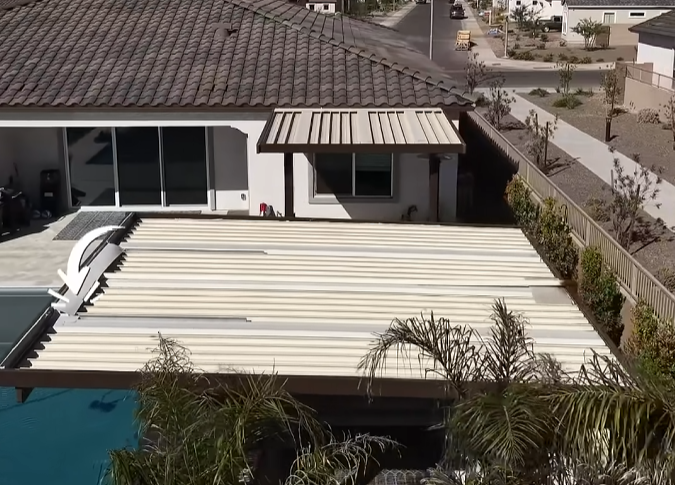
What it is: a shade structure with a solid roof. In the Southwest the word usually means a freestanding or attached rectangular structure with a real roof deck, often finished to match the house with stucco columns, and frequently wired for fans, lights and a TV.
What it costs: roughly 18,000 to 45,000 dollars for a typical residential size, depending on span, roof style, finish and electrical. Attaching to the house and matching the existing roofline sits at the higher end.
Does it make sense here: if you want to use the yard in June, this is the single highest impact structure you can build. The difference between filtered shade and full shade in Phoenix is roughly 15 to 20 degrees of felt temperature, and only a solid roof gets you there. It also protects a TV and furniture from monsoon rain and sun bleaching. Expect a permit and engineering for anything of size, and expect HOA design review in most West Valley communities.
Related service: pergolas, ramadas and gazebos.
Pergola
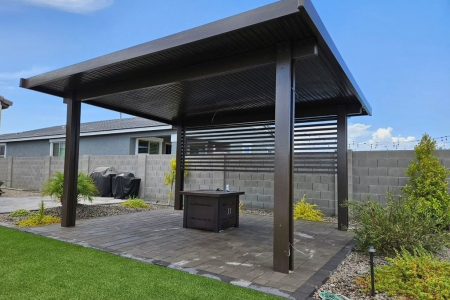
What it is: an open structure with beams and spaced rafters overhead. It filters sun rather than blocking it. Louvered pergolas add pivoting slats you can close for full shade and rain protection, which is a different product at a different price.
What it costs: about 6,000 to 18,000 dollars for a standard wood or aluminum pergola. Motorized louvered systems generally start near 25,000 dollars and climb with size.
Does it make sense here: a fixed pergola is a good fit over a dining area, a side yard, a spa or a grill station, and it is the right call when you want light and structure without closing off the view. It is the wrong call if the goal is to escape a July afternoon, because striped shade still lets most of the heat through. A common and sensible compromise is a ramada over the main seating area and a pergola over a secondary zone.
Related service: pergolas, ramadas and gazebos.
Gazebo
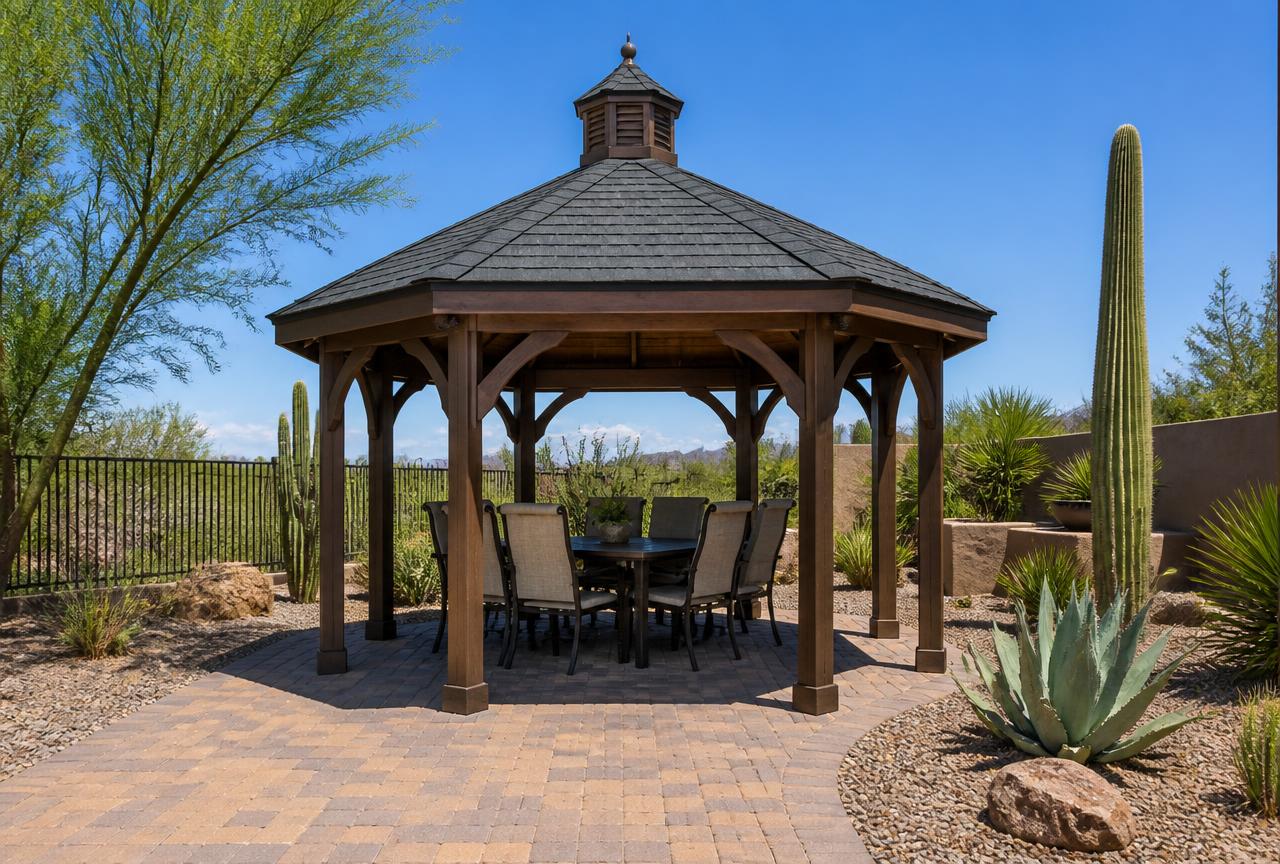
What it is: a freestanding structure with a solid roof and open sides, traditionally hexagonal or octagonal, often with a peaked roof and sometimes a cupola. The difference from a ramada is mostly shape and placement. Gazebos are objects you walk out to, ramadas are extensions of the house.
What it costs: roughly 12,000 to 35,000 dollars for a site built structure on a proper footing and pad. Prefabricated kits are cheaper but usually need a slab, anchoring and an electrician anyway.
Does it make sense here: it makes sense when you have depth in the yard and want a destination, a spot at the far end with a table, a fan and lights. In a shallow lot it competes with the patio instead of adding to it. Anchoring matters more here than people expect, because monsoon microbursts move underbuilt structures. See the full breakdown on our gazebos page.
Related service: gazebos.
Pavers Versus Stamped Concrete Versus Travertine
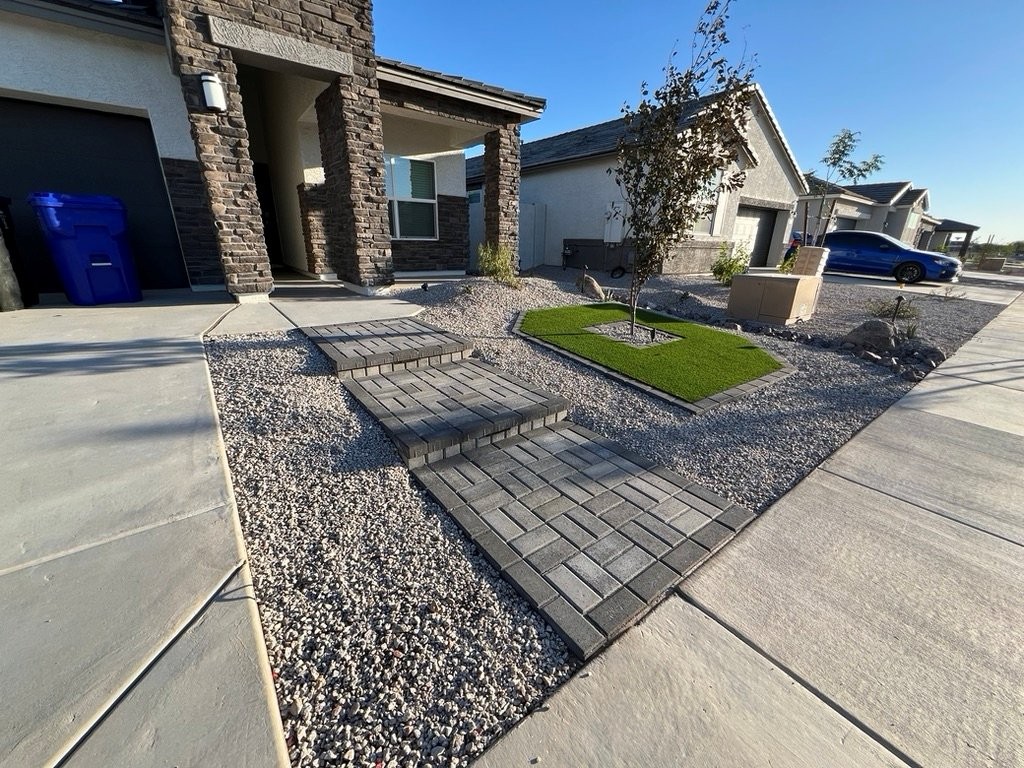
Pavers: individual concrete units set on compacted base and bedding sand, no mortar. They flex with soil movement, and a damaged one can be lifted and replaced. Typically 14 to 22 dollars per square foot installed.
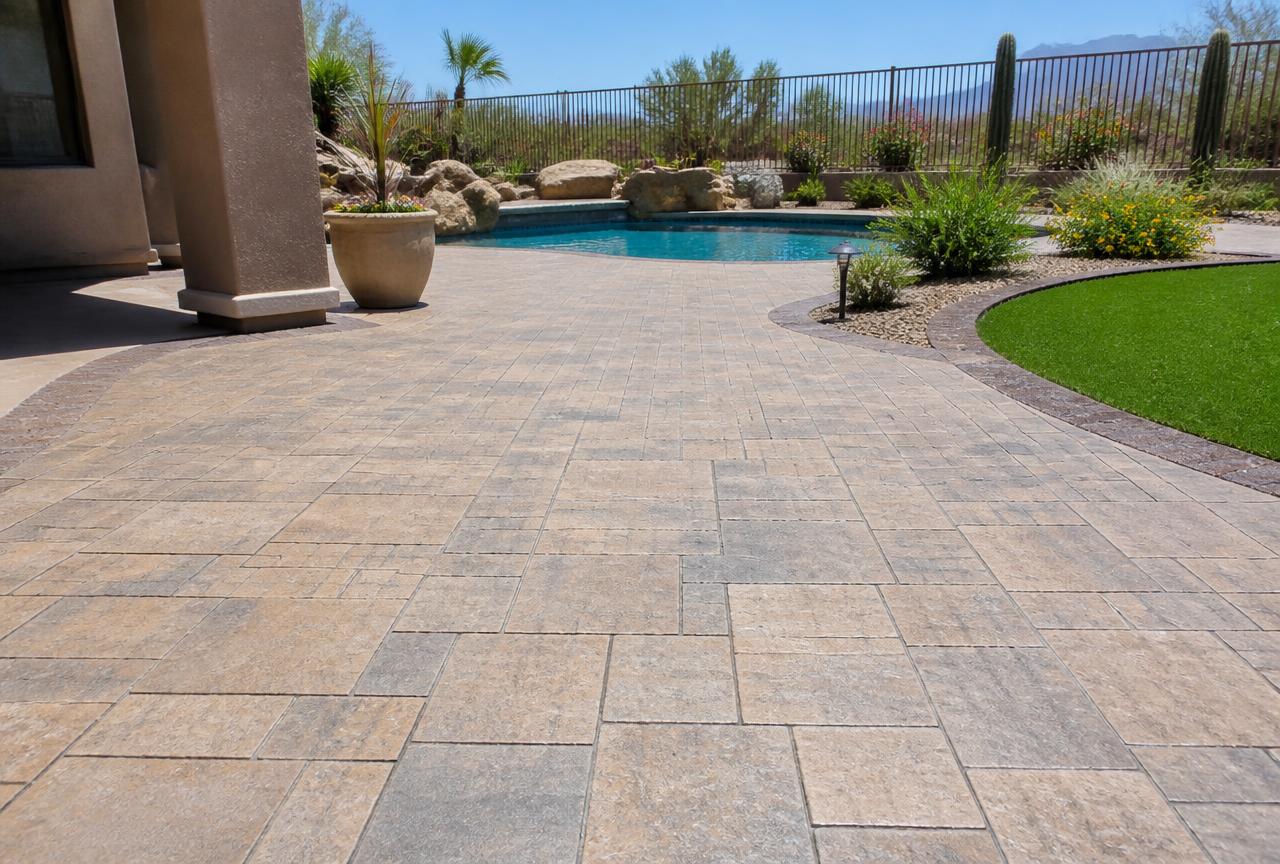
Stamped concrete: a poured slab textured and colored while curing to imitate stone or tile. Usually 12 to 18 dollars per square foot. It is a monolithic slab, so it eventually cracks, and the question is only whether the cracks land in the control joints. Color also fades and needs resealing every few years under our sun.
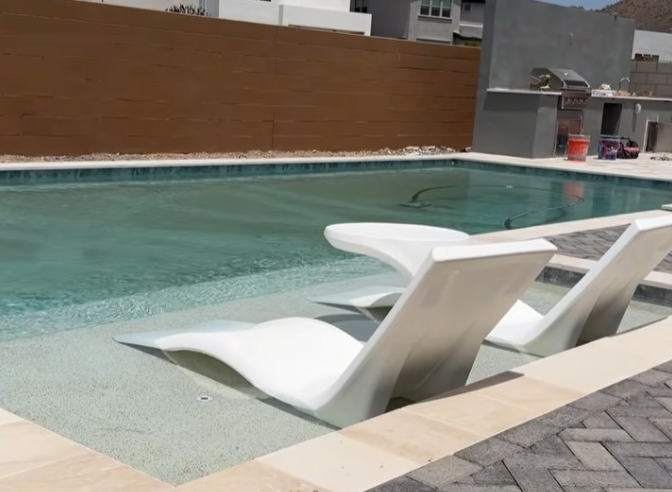
Travertine: natural stone, set like pavers or over a slab. Typically 18 to 28 dollars per square foot installed. The reason it dominates Arizona pool decks is temperature. It reads noticeably cooler underfoot than concrete in the same sun, because the stone is light and porous.
Does it make sense here: for a pool deck, travertine first, light colored pavers second. For a driveway or a large side yard where cost per foot rules, pavers. Stamped concrete makes sense on a budget and in shaded areas, but avoid dark colors near a pool unless you enjoy the sprint from the water to the door. Full comparison in travertine or pavers.
Related service: pavers and hardscape.
Outdoor Kitchen Island Configurations
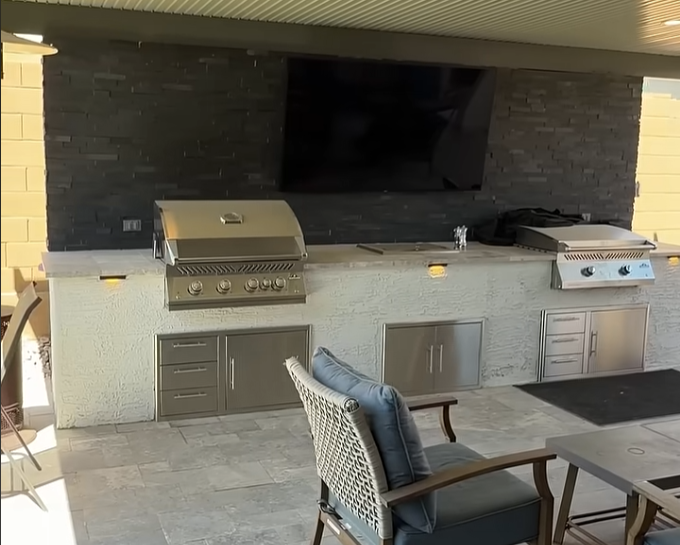
What it is: the counter that holds the grill and everything around it. Configurations come down to three shapes.
- Straight run: one line of counter, grill in the middle, storage below. The smallest footprint and the cheapest to build. About 6,000 to 12,000 dollars.
- L shape: the grill on one leg and prep or bar seating on the other. This is the most common layout we build because it gives you working counter that is not directly beside the heat. About 12,000 to 22,000 dollars.
- U shape: three sides, room for a grill plus a side burner, refrigeration, a sink and a lot of counter. It becomes a genuine second kitchen. About 22,000 to 45,000 dollars and up.
Does it make sense here: in Arizona an outdoor kitchen gets used most of the year, so it is one of the easier features to justify. What decides whether you love it is the details rather than the shape. Put the grill downwind of the seating. Get shade over the cook, since standing at a grill in direct sun is why unshaded kitchens go unused. Plan the utilities before the masonry, gas, water, drain and a dedicated circuit are cheap in the trench and expensive after. And a drain in the middle island, so hosing it down is not a project. We showed that one in the smart detail that makes this patio more usable.
Related service: outdoor kitchens.
How to Use This When You Compare Bids
Most of the confusion in backyard bids comes from vocabulary, not price. One builder writes "entry step," another writes "Baja shelf," and the line items look comparable until you notice the depth and width. One quotes "pool finish" without saying plaster or pebble, which is a five figure difference over the life of the pool. One says "shade structure" and means an aluminum pergola while you pictured a solid roof.
So when you get a proposal, ask three questions on every feature. What are the dimensions. What is the material or finish, by name. What is included that is not obvious, meaning the gas line, the dedicated circuit, the base depth, the engineering and the permit.
If you want a ballpark before you talk to anyone, run the Instant Project Estimate. When you are ready to walk the yard with someone, schedule a consultation and we will tell you which of these features actually fit your lot, and which ones we would skip.