
Irrigation is the least visible part of a landscape and the part that decides whether the landscape lives. We design, install, retrofit, and repair drip and spray systems across Surprise, Peoria, Glendale, and the rest of the Valley. Most of the dead plants we get called out to look at were not bad plants. They were plants on a clogged emitter, a mis zoned valve, or a controller running a schedule somebody set in 2019 and never touched again.
Drip, Spray, And Bubblers: What Each One Is For
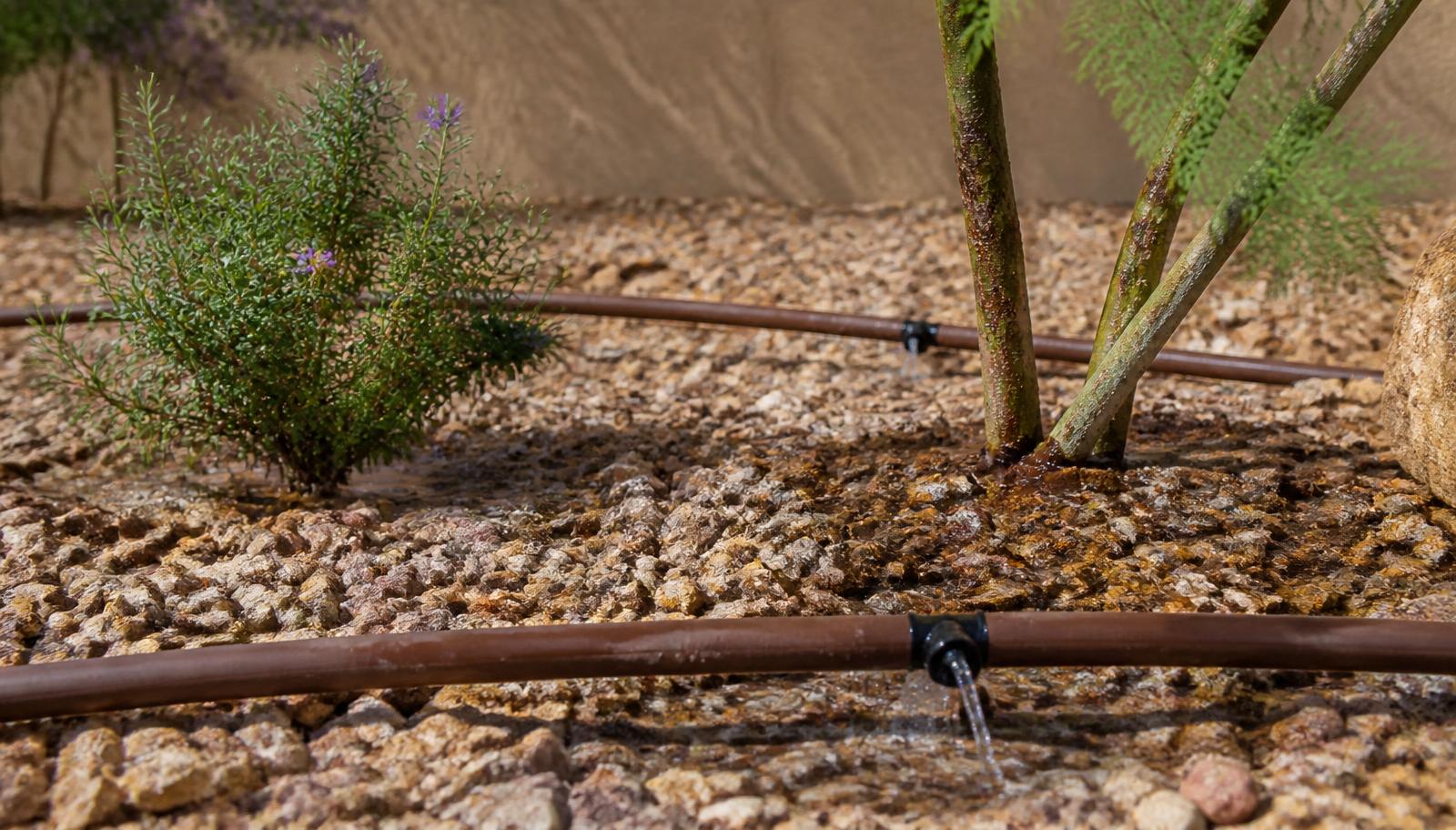
Drip delivers water through small emitters at rates measured in gallons per hour rather than gallons per minute. The water goes down into the root zone instead of sideways into the air. In our climate that matters more than anywhere else in the country, because a spray droplet crossing 105 degree air with single digit humidity loses a real fraction of itself before it lands. Drip also keeps water off block walls, stucco, and pavers, which cuts down on the white mineral staining hard water leaves.
Spray heads, rotors, and rotary nozzles cover broad areas evenly. They belong on real grass, where you actually want to wet a whole surface. On a gravel bed with shrubs three feet apart, spray waters mostly rock and feeds weeds between plants.
Bubblers flood a basin around a tree at a higher flow rate so water gets deep enough to reach a tree's root plate. Trees want infrequent, deep, wide watering. A single half gallon emitter at the trunk of a fifteen year old mesquite is the classic Arizona mistake, and it produces a tree with shallow roots that eventually goes over in a monsoon. We use multiple emitters or bubblers set out at the drip line, and we move them outward as the tree grows.
Zone Design Around Plant Water Needs
A zone is everything one valve turns on at once, so every plant on a zone gets the same runtime on the same days. That single fact drives the whole design. We group by water demand and root depth, not by what is convenient to pipe together:
- Trees. Long, deep, infrequent cycles. Often 60 to 120 minutes, every 7 to 21 days depending on the season.
- Desert shrubs and cactus. Moderate runtimes, widely spaced. Overwatering kills far more desert plants here than underwatering.
- Higher water shrubs, color, and pots. Short, frequent cycles. Pots may need daily water in July while nothing else does.
- Turf. Its own zone or zones with spray or rotary heads, sized so the precipitation rate does not outrun how fast the soil takes water.
We also size zones to available pressure and flow. Every emitter draws from the same pipe, and past a certain point the far end of the run gets less water than the near end. Pressure compensating emitters fix part of that, but the real fix is not overloading the zone in the first place. On sloped lots we account for elevation change too, since gravity adds or subtracts pressure along the run.
Valves, Backflow Prevention, And What Code Requires
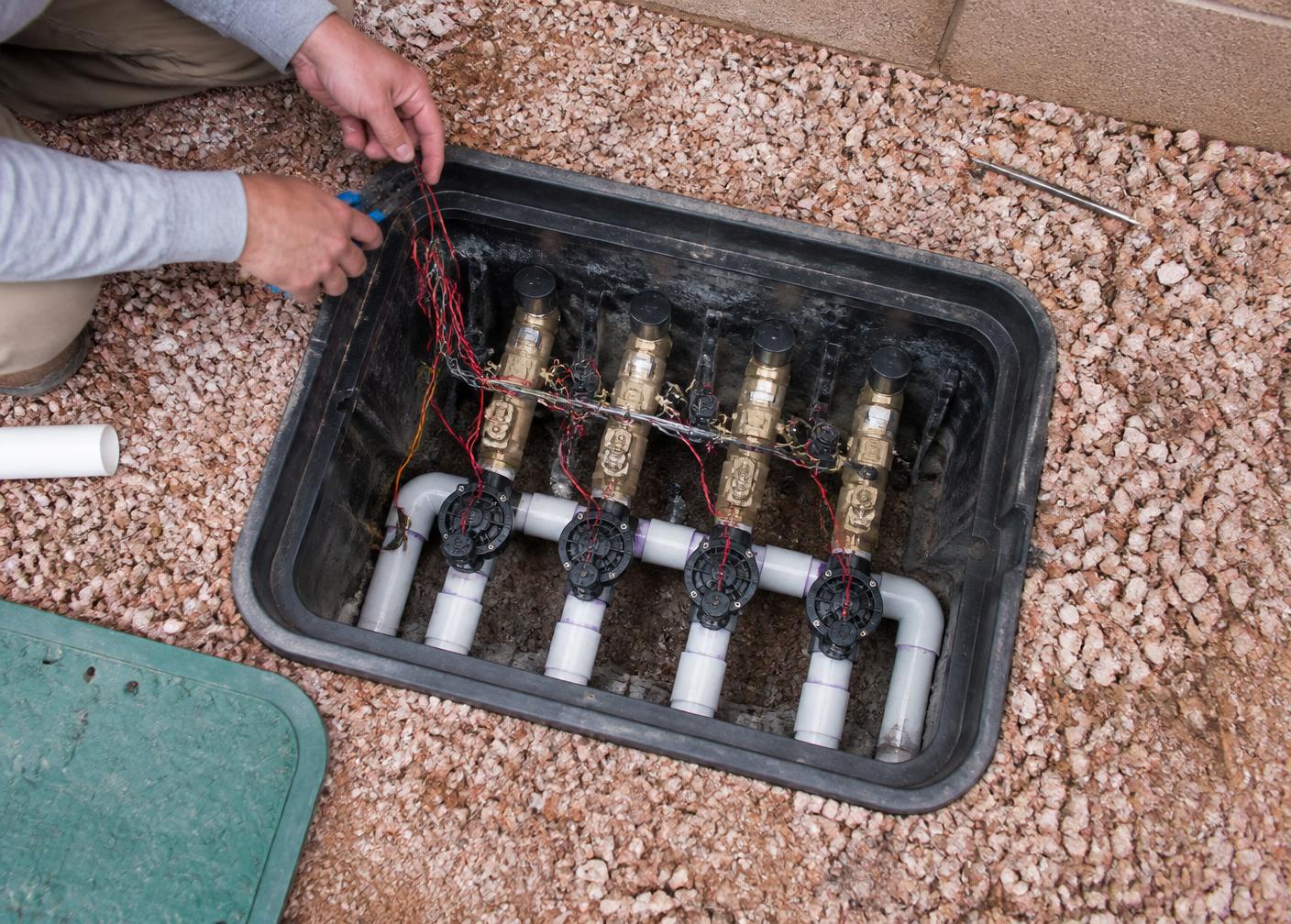
The valve manifold is the mechanical heart of the system. Each zone has an electric solenoid valve that opens when the controller sends 24 volts to it. Those valves live in a box, usually near the side yard, and they are the first thing we check on any service call.
Backflow prevention is not optional. Any system tied to the potable supply needs an approved assembly so irrigation water, fertilizer, and soil contaminants cannot siphon back into the house water line during a pressure drop. Residential systems here typically use anti siphon valves mounted at least six inches above the highest emitter on the zone, or a pressure vacuum breaker on the mainline. Larger systems use a testable reduced pressure assembly. Local jurisdictions follow the Uniform Plumbing Code with amendments, and a new potable connection usually requires a permit and inspection. We handle that, and we do not bury anything before it is inspected.
Timers And Smart Controllers
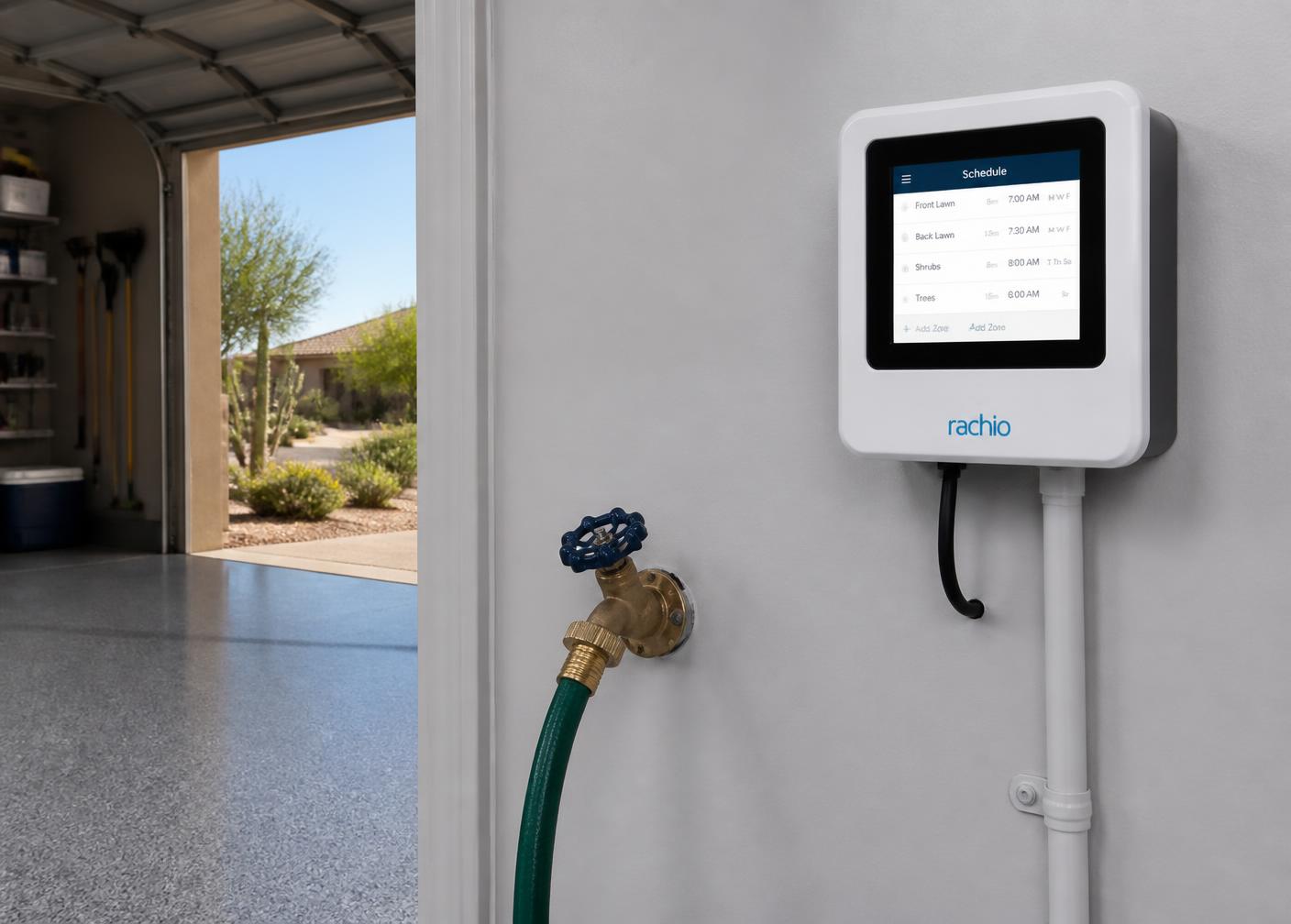
A basic timer runs whatever you programmed, forever, whether it is 118 degrees or raining. A smart controller adjusts runtimes using local weather data, evapotranspiration rates, soil type, plant type, sun exposure, and slope. In this climate that difference typically saves a meaningful share of outdoor water use, and outdoor use is most of a West Valley water bill.
What we look for in a controller: a WaterSense label, real per zone plant and emitter settings rather than just percent seasonal adjust, a rain and freeze skip, flow monitoring if the system supports it, and a phone app you will actually open. Enough zone capacity to add a zone later matters too.
On restrictions and rebates, be careful with anything you read that sounds too confident. Water rules here are set by your provider, and the West Valley is served by a mix of city utilities and private providers, so two neighbors on different systems can face different rules and different incentives. Programs also start and end each year. WaterSense labeling is the usual eligibility requirement for a smart controller rebate, so we install labeled equipment and give you the model and documentation you need to file. Then we point you at your provider's current conservation page to confirm what is active before you buy. We would rather tell you to check than quote you a rebate that expired.
Hard Water, Scaling, And Clogged Emitters
This is the Arizona irrigation problem nobody warns homeowners about. Valley water is hard, commonly 12 to 20 grains per gallon. Every time water sits at an emitter outlet and evaporates, the calcium and magnesium stay behind. Over months that residue builds a chalky ring that narrows the orifice. The emitter never looks broken. It just quietly delivers half of what it used to, then a quarter, and the plant on the end of it declines over two seasons until somebody digs it out and replaces it with an identical plant on the same starving emitter.
Here is what actually prevents it:
- Flush the lines. Pull the end caps and run each zone wide open twice a year so sediment and scale flakes wash out instead of collecting at the last emitter.
- Use a filter and pressure regulator at the head of every drip zone. Most residential mainline pressure is far above what drip emitters are designed for, and high pressure blows fittings and accelerates wear.
- Choose pressure compensating, self flushing emitters. The diaphragm flexes as pressure changes, which breaks up scale buildup instead of letting it set.
- Plan on emitter replacement. Emitters are a consumable, not a permanent fixture. Budget to swap them every three to five years. They cost cents. The plants cost hundreds.
- Watch for the tells. One shrub browning while its neighbors thrive is an emitter problem until proven otherwise, not a plant problem.
Our maintenance visits include flushing, emitter checks at every plant, filter cleaning, pressure verification, and a controller season check. It is unglamorous work that saves entire planting beds, and it protects the plants and trees you already paid for.
Retrofit Or New Install?
Retrofit makes sense when the buried PVC mainline and the valves are sound and the layout roughly matches your current planting. We reuse the mainline and box, add a filter and regulator, convert or cap spray heads, and run fresh poly tubing and emitters where the plants actually are now. Typical cost is a third to a half of new, and it is usually a one or two day job.
New install is the right call when the mainline leaks in multiple places, when the pipe is undersized for the yard, when zones were never separated by plant type, or when the yard is being redesigned anyway. If we are already installing turf or pavers, doing irrigation at the same time costs far less than trenching through finished hardscape later.
Repairs: Leaks, Valves, And Broken Heads
Most of our irrigation calls are repairs, and most repairs fall into a handful of categories:
- Mainline and lateral leaks. We isolate zones, watch the meter with the system off, pressure test, and dig only where the evidence points. A wet patch that never dries, a sinkhole in the granite, or one very happy weed usually marks the spot.
- Valves that will not close. Grit under the diaphragm keeps a zone weeping. Sometimes it is a rebuild kit, sometimes the valve body is done.
- Valves that will not open. Failed solenoid, a cut or corroded wire, or a controller output that quit. We test at the valve and at the controller rather than replacing parts blindly.
- Broken and sunken spray heads. Run over, hit by a mower, or sunk below grade so the pattern sprays into the turf.
- Chewed poly tubing. Rabbits and rodents chew drip line, especially near new plantings. We repair and, where it keeps happening, reroute or protect the runs.
- Clogged emitters. See the hard water section. This is the most common cause of a plant dying next to a healthy one.
Cost Ranges
| Scope | Typical range | Notes |
|---|---|---|
| Repair visit (valve, head, small leak) | $150 to $450 | Includes diagnosis and parts for a single common failure |
| Drip retrofit, small yard, 2 to 3 zones | $900 to $1,800 | Reuses sound mainline and valves, new tubing and emitters |
| New system, average lot, 4 to 6 zones | $2,500 to $5,000 | Mainline, manifold, backflow, tubing, emitters, controller |
| Large lot, 7 or more zones with turf | $5,000 to $9,000 | Spray or rotary turf zones, bubblers at trees, smart controller |
| Smart controller supply and install | $350 to $750 | WaterSense labeled unit, wiring, zone programming |
| Seasonal maintenance visit | $125 to $275 | Line flush, emitter check, filter clean, schedule reset |
Every number above is a range, and you get a fixed written price before we start. No hourly surprises and no charging you for a Lamborghini payment.
Common Questions
- Why is drip irrigation better than spray in Arizona?
- Drip puts water at the root zone slowly enough that the soil can absorb it, so almost nothing is lost to evaporation or wind drift. Spray heads throw water into 105 degree air over gravel, where a large share of it never reaches a root. Drip also keeps water off hardscape and block walls, which reduces the white mineral staining our hard water leaves behind. For desert planting beds, trees, and shrubs, drip is the right answer nearly every time. Spray still has a place on real grass.
- How many irrigation zones does my yard need?
- Zones are grouped by water need and emitter type, not by geography. A typical West Valley yard runs four to eight zones: front trees, front shrubs, back trees, back shrubs, potted plants, and one or two turf zones if there is grass. Mixing a mature mesquite and a bed of annuals on the same valve guarantees one of them is wrong, so we split them. Available water pressure and flow also cap how many emitters a single zone can run.
- Does Arizona code require backflow prevention on irrigation?
- Yes. Any irrigation system connected to the potable supply needs an approved backflow prevention assembly so fertilizer, soil bacteria, and standing water cannot siphon back into your drinking water. Most residential systems here use anti-siphon valves installed at least six inches above the highest emitter, or a pressure vacuum breaker on the mainline. Larger or commercial systems require a testable assembly. Local jurisdictions follow the Uniform Plumbing Code with amendments, and permits are typically required when we tap a new connection.
- What does hard water do to a drip system?
- Valley water is hard, generally in the 12 to 20 grains per gallon range. As water evaporates at the emitter outlet, calcium and magnesium stay behind and build a chalky ring that slowly chokes the opening. A one gallon per hour emitter can drop to a trickle in two or three years without ever looking broken. The plant declines first, then dies, and most homeowners blame the plant. Flushing lines, replacing emitters on a schedule, and using pressure compensating emitters with self flushing diaphragms are what prevent it.
- Can you retrofit my old spray system to drip?
- Usually yes, and it is a lot cheaper than a full replacement. We keep the existing mainline and valve box if the PVC is sound, cap or convert the spray heads, add a pressure regulator and filter at the head of the drip zone, then run new poly tubing and emitters through the beds. A retrofit typically runs a third to a half of a new install because the expensive underground work is already there.
- How do you find an underground irrigation leak?
- We start by isolating zones and watching the meter with everything off, which tells us whether the leak is on the mainline or downstream of a valve. From there it is pressure testing the zone, listening at valve boxes, and looking for the tells: a wet spot in gravel that never dries, a sinkhole in the decomposed granite, weeds thriving in one strange place, or a water bill that jumped without a schedule change. Most leaks turn out to be a cracked fitting, a chewed poly line, or a valve that no longer seats.
- What does an irrigation system cost?
- A drip retrofit on a small yard starts around 900 to 1,800 dollars. A new four to six zone drip system for an average West Valley lot generally runs 2,500 to 5,000 dollars. Large lots with turf zones, many trees, and a new controller run 5,000 to 9,000. Individual repairs like a valve replacement or a broken head are usually 150 to 450 dollars including the service call.
- Are there rebates for smart irrigation controllers?
- It depends on your water provider, and it changes year to year. Several Valley providers and the regional conservation programs have offered smart controller rebates in the 50 to 250 dollar range, and some cities offer landscape conversion incentives. We do not guess on your behalf. We tell you which controllers are WaterSense labeled, since that is the usual eligibility requirement, and we point you at your provider's current conservation page so you can confirm what is active before you buy.
Irrigation In Your City
We are based in Surprise and work across the West Valley. Start with irrigation in Surprise, AZ for local water provider details, or see Peoria and Glendale.
Get Your Water Where It Belongs
New systems, retrofits, and repairs. Fair pricing and a crew that explains what it found.